A useful inspection starts with the building.
Musty odor, staining, recurring humidity and visible growth are clues. The real question is what building condition is allowing moisture to collect. TMG reviews accessible areas, gathers measurements and explains which findings matter.
What the evaluation may include
- Visual moisture-damage review
- Moisture-meter readings
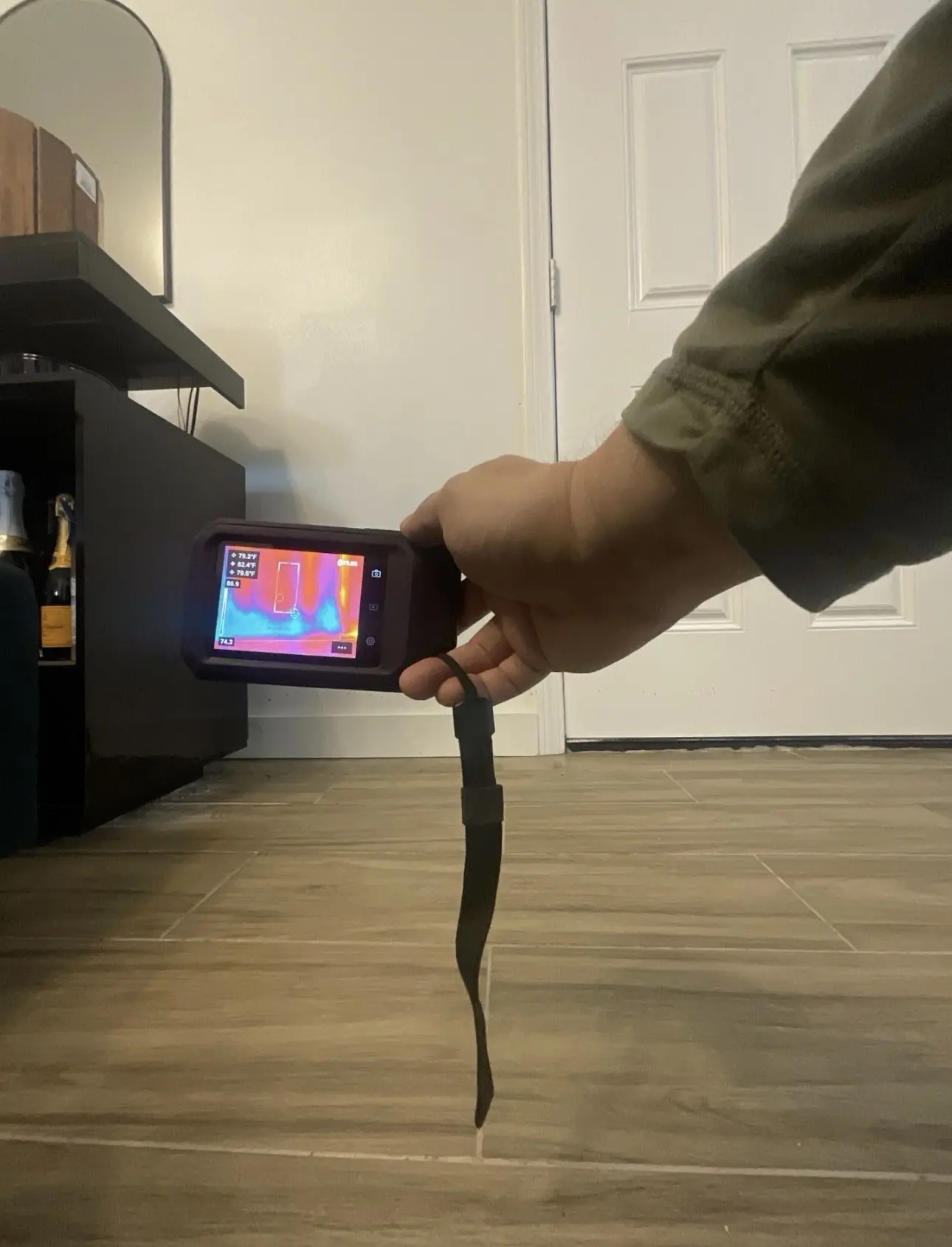
- Thermal-imaging screening
- Indoor humidity measurements
- HVAC pathway observations
- Condensation-condition review
- Roof, wall and plumbing clues
- Photo documentation
What an inspection can—and cannot—show.
Moisture meters and thermal cameras are useful screening tools, but they must be interpreted in context. A thermal image does not directly see water, and a non-destructive inspection cannot guarantee every concealed condition. The evidence may support targeted openings, plumbing evaluation, HVAC correction or other specialized work.
Mold concerns require source control.
Surface cleaning or painting is not a durable answer when the moisture condition remains. When affected material and a continuing moisture source are confirmed, TMG can explain the remediation path and whether independent environmental input is appropriate.
Sampling and independent clearance
TMG focuses on building conditions, visible evidence, moisture and remediation. When air or surface sampling, protocol development or independent post-remediation verification is appropriate, an unaffiliated environmental professional can perform that role.
A practical next step—not a scare report.
The goal is a clear decision: correct a leak, improve humidity control, seal an air pathway, make a targeted inspection opening, obtain specialist testing or proceed with controlled remediation.
Related help
Review TMG's indoor air quality evaluations, moisture and leak detection, and mold remediation process.